Bangladesh endured over 63 million cyber attacks in 2023.
This Cybersecurity Center embedded within North South University (NSU), is aligned with the APAC Cybersecurity Fund program led by The Asia Foundation. Drawing on UC Berkeley’s Cybersecurity Clinic Development Toolkit and regional models, the center adopts a sustainable, scalable approach to training cybersecurity talent and delivering hands-on support to MSMEs, NGOs, and community organizations in Bangladesh.
As the first step, this center launches a Cybersecurity Clinic initiative featuring two core in-person courses: “Digital Hygiene and Cybersecurity Awareness” (for general audiences) and “Risk Assessments and Incident Response” (for tech-oriented personnel). These courses will equip over 100 students with practical skills using open-source tools such as OpenVAS, Nikto, and NIST frameworks.
The top 10 performing students will conduct on-site audits at MSMEs and NGOs to identify and remediate vulnerabilities, delivering detailed reports to strengthen organizational security.
This center emphasizes ethical, public-interest-oriented training and community service, aiming to support at least 300 digitally vulnerable organizations through risk assessments, awareness workshops, and tailored incident response plans. By tackling prevalent local threats like phishing, ransomware, and data breaches, this center will enhance national resilience, reduce economic losses, and establish NSU as a leader in cybersecurity capacity-building.
The APAC Cybersecurity Fund is an initiative by The Asia Foundation, supported by Google.org, Google’s philanthropic arm, designed to build inclusive and sustainable cybersecurity ecosystems across the Asia-Pacific. Through cyber hygiene training, policy research, and stakeholder engagement, the program helps micro and small businesses, nonprofits, and social enterprises strengthen their cyber resilience. It also invests in long-term capacity by establishing more than 20 university-based cyber clinics to expand outreach and develop the region’s cybersecurity workforce. The initiative spans across 13 countries including Australia, Bangladesh, India, Indonesia, Japan, Korea, Malaysia, Pakistan, Philippines, Singapore, Sri Lanka, Thailand, and Vietnam. You can learn more about at: www.apaccyberfund.com

Course Overview
This foundational course equips participants with essential everyday cybersecurity awareness and practical digital safety skills. It focuses on identifying common cyber threats and applying preventive measures in real-life scenarios to ensure personal and professional data protection.
Key Topics Covered:
Program Structure:

(24-Hour Professional Course)
Course Overview
This intensive 24-hour course is designed to strengthen the cybersecurity resilience of Micro, Small, and Medium Enterprises (MSMEs). It focuses on identifying, assessing, and mitigating cyber risks specific to small business environments through practical, hands-on training and real-world simulations.
Participants gain practical exposure to vulnerability scanning, ethical hacking fundamentals, and structured incident response planning aligned with the NIST framework. The course incorporates real-world labs using tools such as OpenVAS, Nessus, Lynis, and Sysinternals for exposure discovery, log analysis, ransomware simulations, and incident detection/response drills. It also prepares MSMEs to report cybersecurity incidents effectively to BGD e-GOV CERT and relevant law enforcement authorities.
Key Modules Covered:
Program Structure:


Department of Electrical and Computer Engineering
North South University, Plot 15, Block B, Bashundhara, Dhaka-1229
Date: November 30, 2025
Time: 9:00 AM – 5:00 PM
Venue: North South University
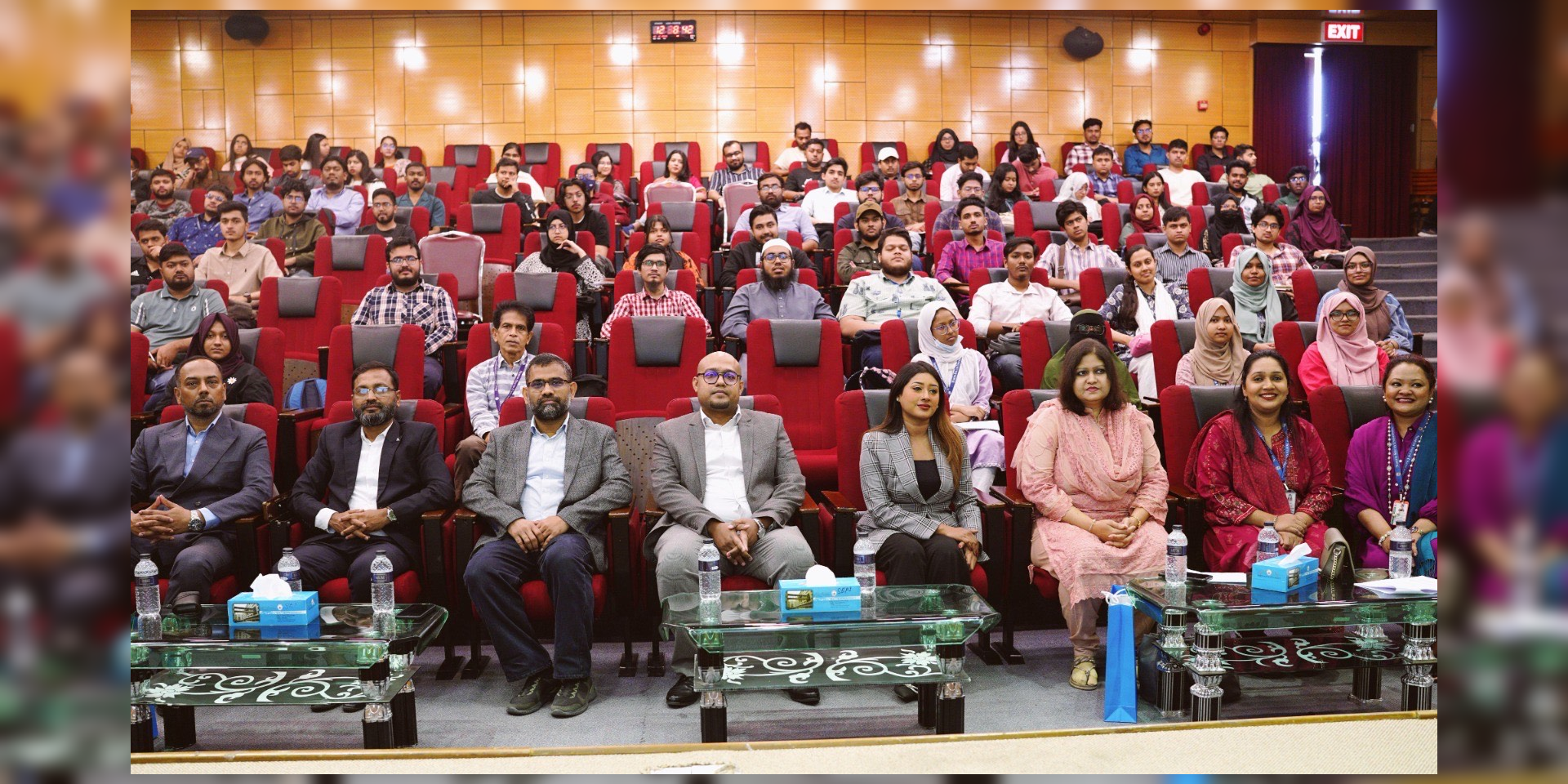
North South University (NSU) successfully hosted NSU Cybersecurity Day 2025 on November 30, 2025, a day-long flagship event dedicated to advancing cybersecurity research, skills development, and cross-sector collaboration in Bangladesh. Designed as a comprehensive tech showcase and Panel Discussion platform and MoU Singing, the event brought together leading universities, government agencies, industry partners, and international organizations to exchange ideas and highlight innovations critical to strengthening national cyber defense. The Chief Guest of NSU Cybersecurity Day 2025 was Major General Md. Nasim Parvez, Commandant, Military Institute of Science and Technology (MIST), whose presence underscored the strategic importance of cybersecurity to national security and defense.
University Project Showcase
A central highlight of the day was the Cybersecurity Project Showcase, featuring ongoing and completed research initiatives from five leading universities. Participating institutions included North South University, BRAC University, University of Dhaka, Military Institute of Science and Technology (MIST), and Canadian University Bangladesh. The showcase demonstrated the depth and diversity of cybersecurity research being undertaken across academia, with a strong emphasis on practical, future-ready solutions.
Notable showcased projects included:
Industry and Product Showcase
Complementing the academic exhibits, the event featured a Company Product Showcase with active participation from leading technology and IT service providers, including Smart Technology, Primenet, Daffodil IT, and Ryans Computers Ltd. These exhibits highlighted industry-ready solutions and reinforced the importance of academia–industry collaboration in building a resilient cybersecurity ecosystem.
Panel Discussion: Strengthening National Cyber Defense
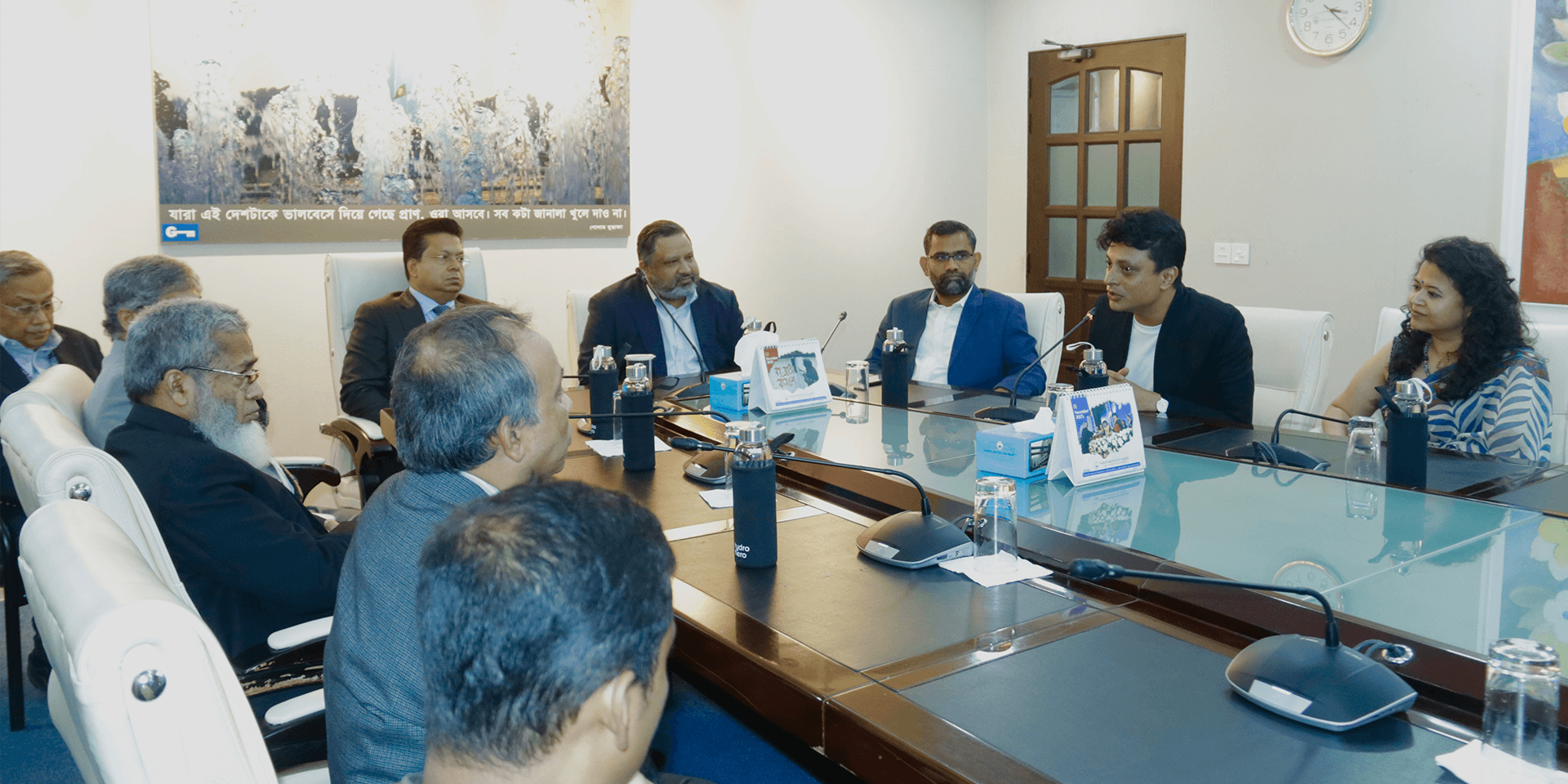
A high-level panel discussion titled “Strengthening National Cyber Defense Through Skills and Startup Innovation” was held as a key intellectual segment of the program. The discussion brought together distinguished policymakers, academics, industry leaders, and development partners to explore strategies for workforce development, innovation, and institutional readiness.
The panel was moderated by Prof. Dr. Shazzad and featured the following panelists:
The session generated dynamic and constructive dialogue, emphasizing the alignment of skills development, startup innovation, and public private collaboration to safeguard Bangladesh’s digital future. The event was further honored by the presence of distinguished guests, including, Farzana Sharlin, Engr. Farid Ahmed (Department of Inspection for Factories and Establishments or nominee), and Mr. A. N. M. Obaidullah (Bangladesh Power Development Board or nominee).
Opening Ceremony and MoU Signing
The program included an Opening Ceremony attended by NSU’s Honorable Vice-Chancellor, special guests, and students. This was followed by a Special Lunch Session, fostering informal engagement among participants.
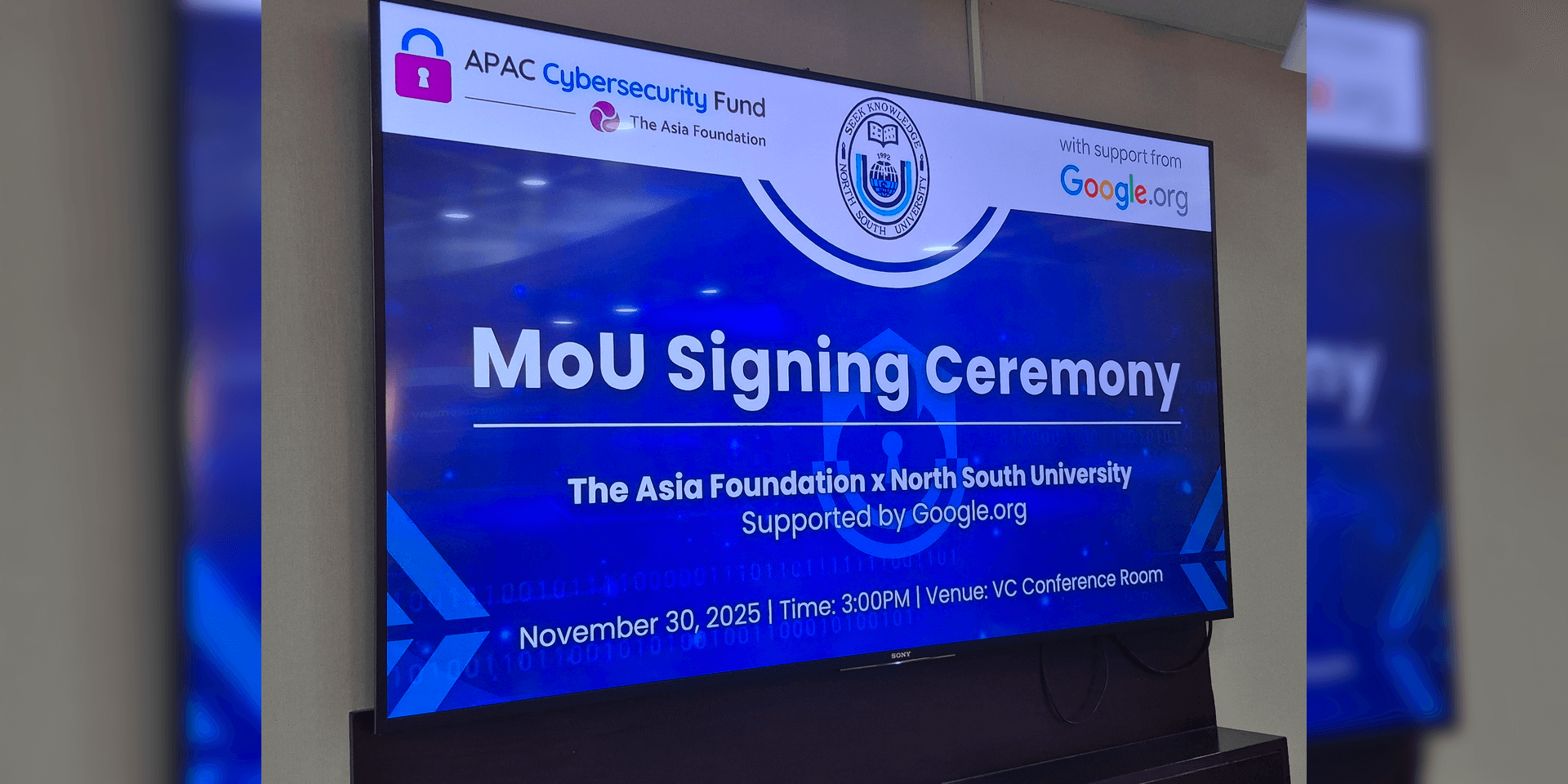
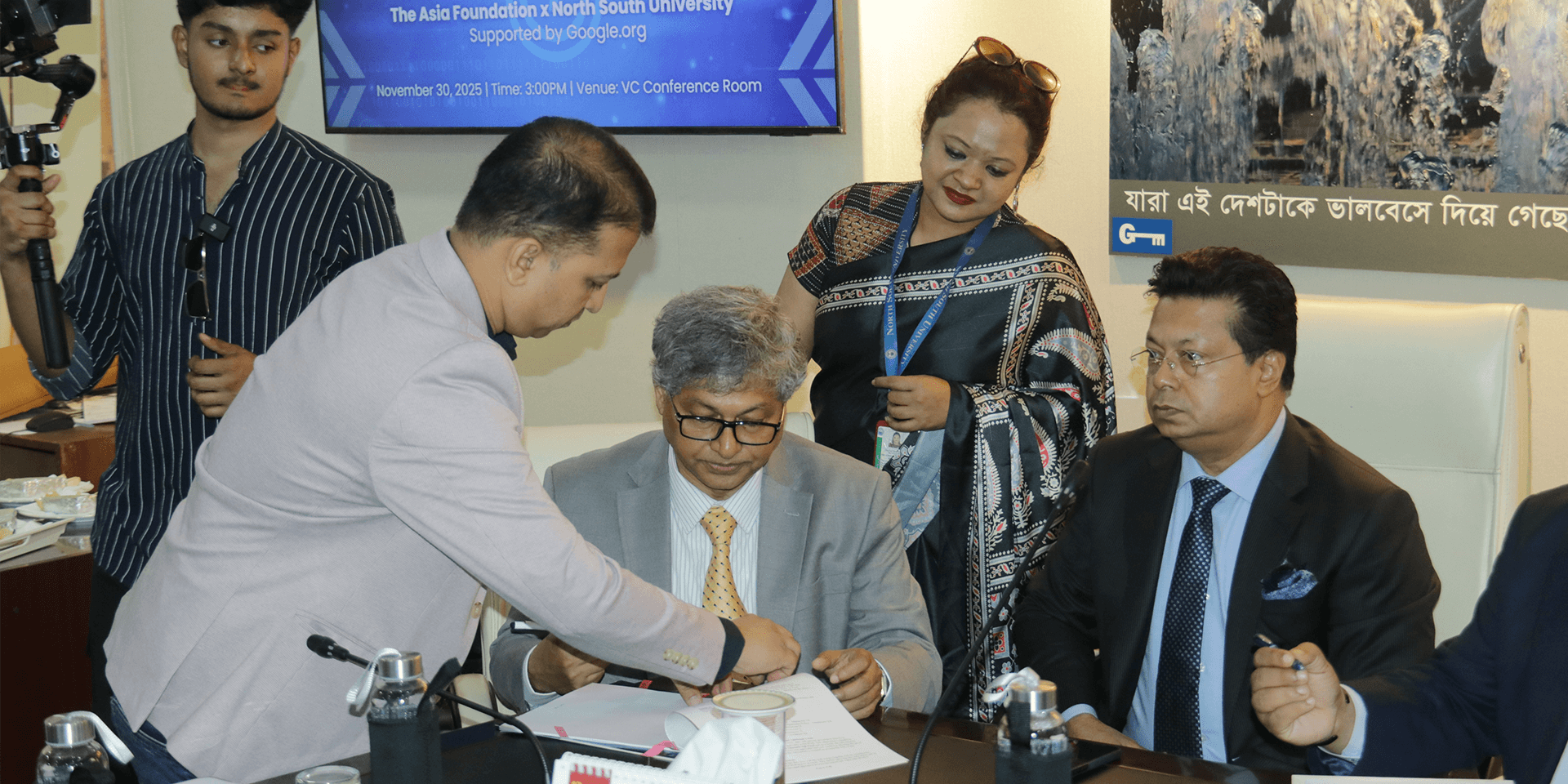
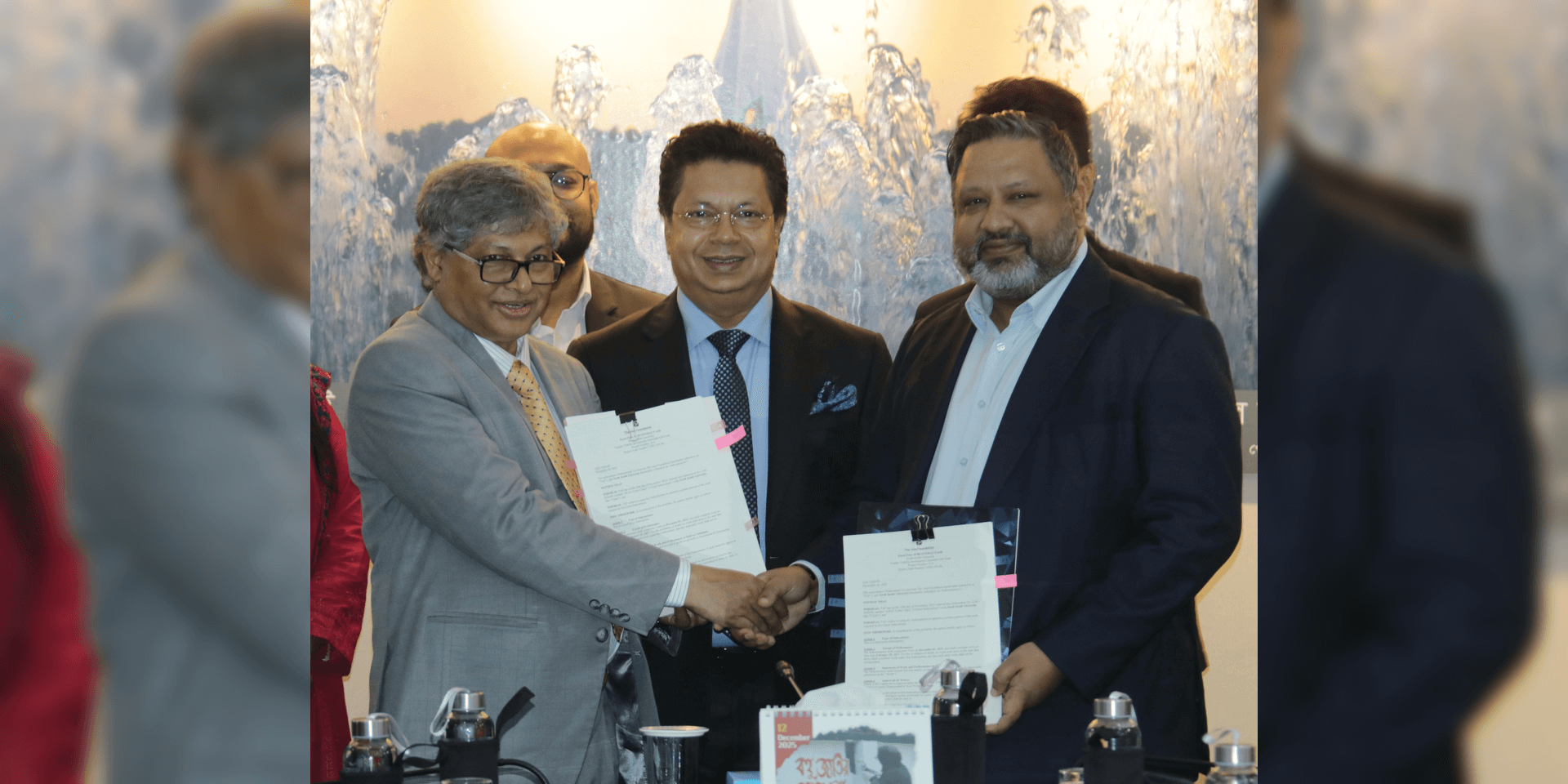
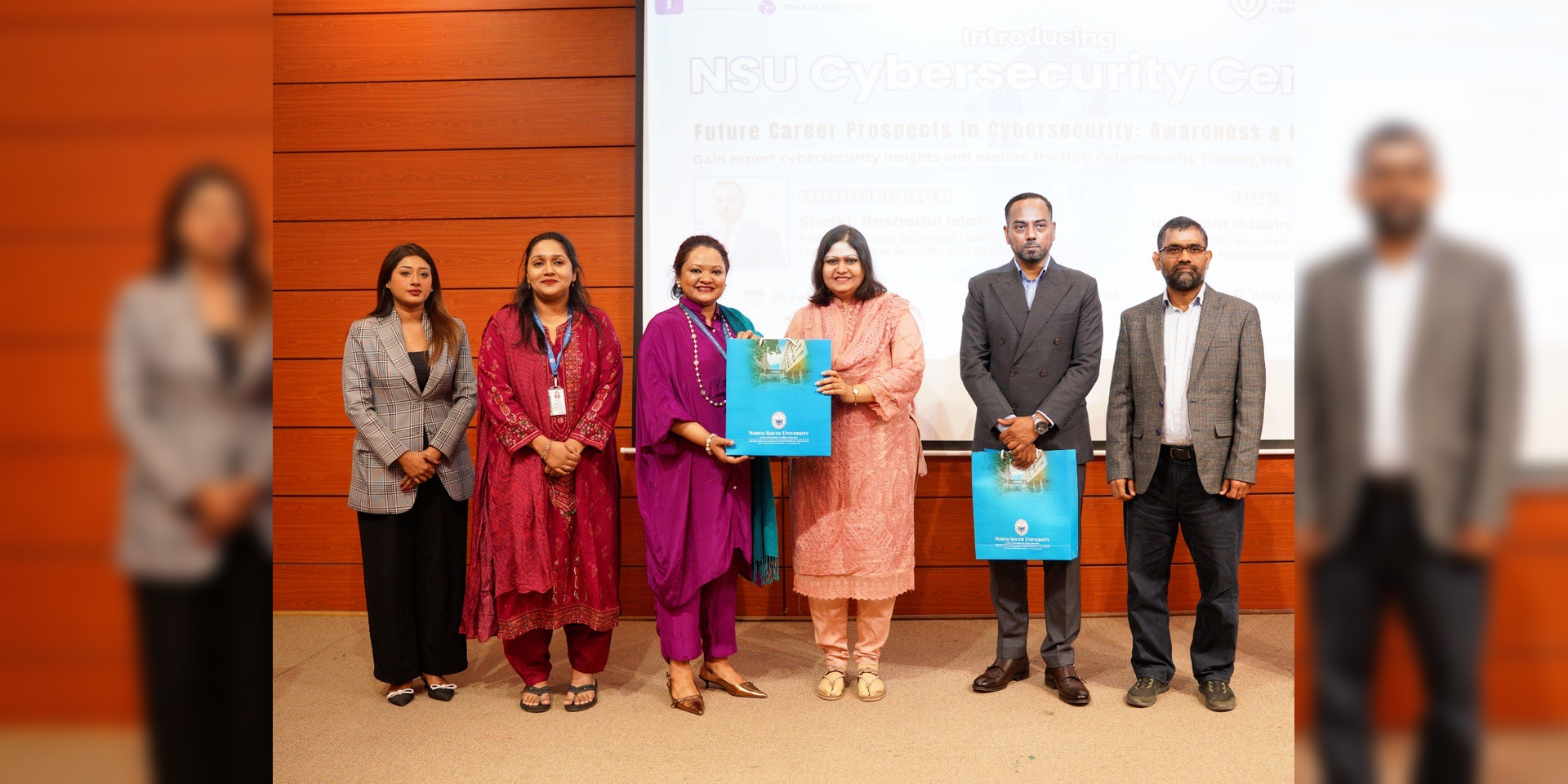
A significant milestone of the day was the Memorandum of Understanding (MoU) signing between North South University and The Asia Foundation, aimed at strengthening collaboration in cybersecurity education, research, and capacity building. This initiative specifically focuses on the establishment and advancement of the NSU Cybersecurity Center, which will serve as a dedicated platform to provide structured training, hands-on learning, and skill development opportunities for students in the field of cybersecurity. The MoU signing marked NSU’s continued commitment to international partnerships and sustainable impact in the national cybersecurity landscape.
Conclusion
NSU Cybersecurity Day 2025 successfully integrated research, industry innovation, policy dialogue, and international collaboration within a single platform. By convening academia, government, industry, and development partners, the event reaffirmed North South University’s leadership role in shaping Bangladesh’s cybersecurity ecosystem and advancing a secure digital future for the nation.